

Written by Professor Abdelkader Bouarfa
Proofread by Prof. Belkacem BELMEKKI University of Oran 2 Mohamed Ben Ahmed
We begin with a meta-historical reflection on a striking paradox: the journey of Charles Lavigerie and his infamous phrase “We have returned, O Muhammad,” contrasted with the visit of Pope Leo XIV and his motto “Peace of Augustine.” This semantic shift encapsulates a dense historical trajectory—from the violence of colonial symbolism to the possibilities of civilizational dialogue, from the “arrogance” of coercive proselytism to the “tolerance” of a possible encounter
The visit of Leo XIV to Algeria in April 2026 can be read as an interpretive moment that transcends the surface of a religious event to reach the deeper geopolitical structure of meaning. It is not merely a papal passage across Mediterranean geography, but a reconfiguration of the “horizon of expectations” in Algeria’s relationship with the West—particularly with France—where colonial memory intersects with present-day stakes
In contrast, one must recall the figure of Charles Lavigerie, who, since 1867, embodied what may be termed “colonial missionary thought.” For him, religion was not merely faith, love, peace, or mutual recognition; it was an instrument for re-engineering both people and land. Lavigerie operated within a colonial project aimed at dismantling the symbolic structure of Algerian society through a form of proselytism disguised as social and educational initiatives. Its ultimate goal was to produce a dislocated subject, reshaped according to a Eurocentric Christian framework
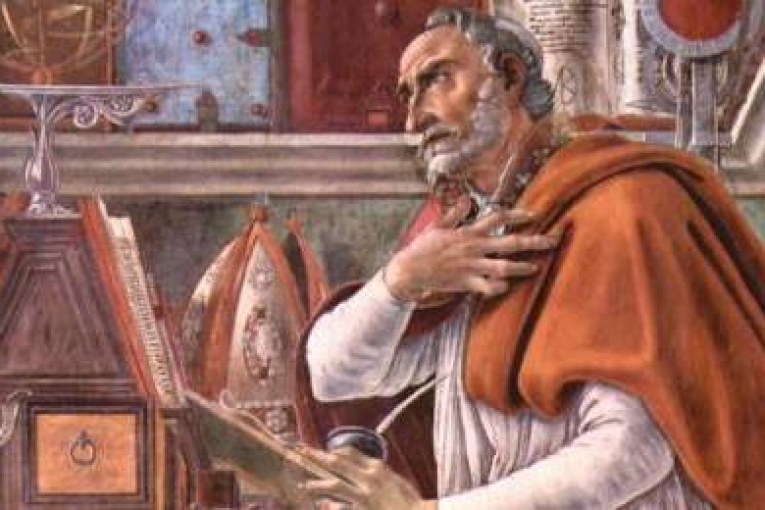
Here, we can compare two models: Lavigerie’s model, which represents “symbolic violence” in the sociological sense—where meaning is imposed from the outside under the guise of salvation—and the model of Leo XIV, who is presented today as an actor of both an “ethics of dialogue” and an “ethics of recognition.” In this latter framework, religion shifts from being a tool of domination to a language of mutual acknowledgment. The figure of Saint Augustine becomes a symbol of dialogue and recognition, much like the figure of Emir Abdelkader in Algerian historical consciousness
Placing the event within a broader context, post-independence Algeria is no longer an object of colonial history but an active subject redefining its position within the African–Mediterranean space. Its welcoming of the Pope should not be read as passive response, but as a sovereign act that redefines its relationship with the Other. Algeria thus moves from being the “target” to becoming the “interpreter,” from an object of proselytism to a framework for producing meanings of coexistence, shared living, and mutual recognition
The official Algerian discourse reflects a reversal of the historical equation. The state is not perceived as a peripheral entity within a Western-centered system, but as a self-centered actor capable of accommodating difference without losing its Islamic reference framework. In this sense, the visit becomes a form of “symbolic capital,” invested in reshaping Algeria’s international image and opening channels of soft diplomacy, particularly in a moment of tension with certain Western actors
Expanding the analysis further, “tolerance” here is not merely an abstract moral value, but a strategy of existence. Algeria exercises a form of “interpretive sovereignty” and “historical sovereignty” by reintegrating the religious event into its own cultural and political system—without allowing it to slip into new forms of proselytism or neo-colonial projects
From a philosophical perspective, the shift from Lavigerie to Leo XIV reflects not merely the difference between two individuals, but between two modes of consciousness: a colonial intent that sees religion as a means of expansion, domination, and alienation, and a contemporary civilizational awareness that seeks to transform such visits into horizons of coexistence
This explains why Algerians reject the arrogance of the past while embracing the tolerance of the present. It reveals Algeria as a historical entity capable of transforming memory from a burden into a tool, from a wound into a possibility—without ever forgetting. The minaret of the Djamaa El Djazair will remain a powerful response to the place where Lavigerie once stood, while Saint Augustine endures as a symbol of recognition and dialogue
Algerian intelligentsia today seeks to break the “phobia of the Other” shaped by Western media narratives, while simultaneously establishing a logic of parity. The world is too vast to remain confined within a single polarity. The earth belongs to all, peace is the aspiration, and coexistence is the goal
.Let us work on what unites us, and let us excuse one another on what divides us